“A picture is worth a thousand words”
Above is a quote we’ve all heard countless times. It’s a phrase that has held, and will continue to hold, a lot of merit since the dawn of photography in recent history. Now, some may disagree and believe that written word, which has been around a few thousand years longer, carries more weight. I’d say that’s a fair point, but then again… Luckily, we live in a time where the two mediums don’t have to be mutually exclusive. In the context of digital storytelling, the combination of both unique means of expression allow for a rich multimedia blend able to convey stories, emotions, and depth in ways previously unheard of.
That’s why in today’s blog post we’ll be covering all-things photography – reflecting on expert tips to train your eye, exploring visual literacy, looking at the history of impactful photos, and more!
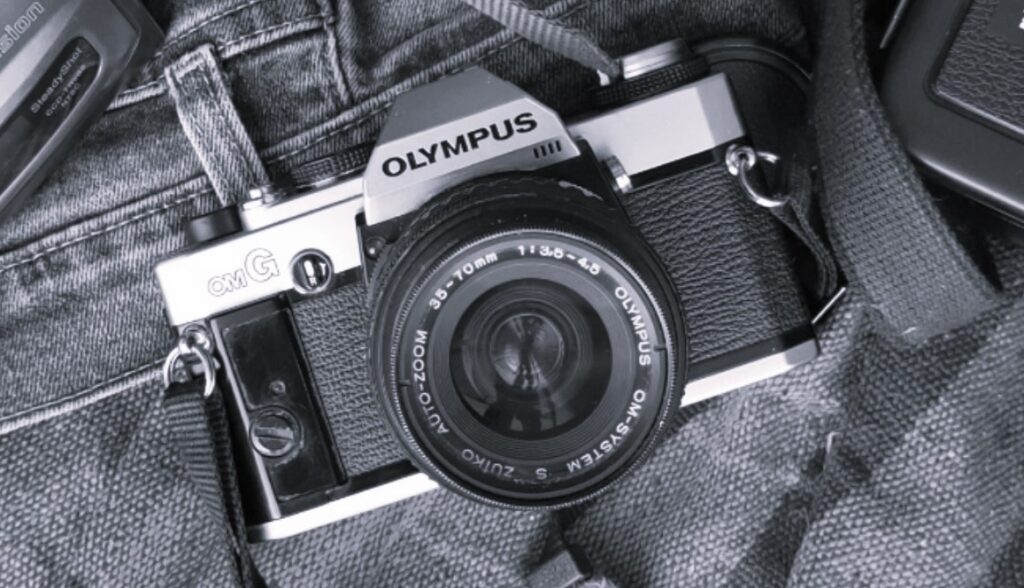
“20 Ways To Make Better Photographs”
Firstly, we’ll be examining excerpts from David duChemin’s guidebook on mastering photography. I found many of these tips familiar, but it’s always worth brushing up! Below are a few of things he recommends taking note of:
Get Pickier
As fun as “automatic” is, aspiring photographers should try to work in “manual” (having control over aperture, shutter speed, ISO, etc.) to better grasp the fundamentals. A part of this means slowing down and shooting with purpose. Taking the time to analyze a scene and decide on how you want to capture it pays off well in regards to quality.
Better Contrast Makes Better Stories
While out and about, look for things that go well NOT going well together. A thoughtful focus on contrast, from clashing colors to eye-catching subjects, is a good way to elevate the quality of your photos.
Change My Perspective By Changing Yours
Don’t be afraid to try out different and unusual camera angles. Even seemingly boring subjects have a good side!
Create Depth
Look for ways to layer subjects and play with the foreground/background to keep things interesting!
Get Balanced
One of the most well-known “rules” of photography is the “rule of thirds” which is where a composition is divided by a grid into nine equal parts, with subjects advised to be positioned on intersecting points. However, there are many more ways to frame a shot, so keep in mind that despite being a “rule” its more so a suggestion than anything.
Pay Attention To The Moment
It’s important when taking pictures to try and anticipate interesting things before they happen in any particular environment. Having your camera set up, ready to shoot a specific subject like this helps afford you more time to channel your creativity and adjust various settings to achieve the vision you have. (Instead of accidently ruining what otherwise would’ve been a great photo if not for your thumb directly covering the lens — speaking from experience here).
Look To The Light
Good lighting can make or break a photograph. Knowing the effects aperture, shutter speed, and ISO have on your photos is very important!
Use The Best Lens
Often overlooked in place of an obsession with specific camera models (*cough* Sony *cough*), lenses play a massive role in choosing how one wishes to capture a moment. For example, a macro lens specializes in the up-close-and-personal while a telephoto lens helps bridge the sometimes large distance between camera and subject. It’s worth keeping in mind that some lenses, especially high quality ones, can cost more than most cameras.
Expose For Aesthetics
This is where switching to “manual” really comes in handy. Remember aperture, shutter speed, and ISO? Well, if you’re feeling adventurous, you can utilize these elements to craft specific aesthetics for your photographs. For instance, if you want to portray how lively a city square is, having a low shutter speed might help as it allows for motion blur.
Put A Great Foreground In Front, Attention At Background
For example, a photograph of a mountain landscape might feel more dynamic with a few tree branches or leaves adding texture in the foreground. It’s also beneficial to learn how to avoid things such as clutter or other distracting elements (unless that’s what you are going for)!
What Is Visual Literacy?
I’m about to watch a video by Toledo Museum of Art that explores the concept of “visual literacy,” but before I do, I figured it might be fun to write out my own definition. That way afterwards I can see how my conceptualization stacks up against theirs. In my own words, I would describe visual literacy as the ability to critically examine media in a way that provides space for informed criticism, both constructive and otherwise, of visual artifacts. That being said, time to watch the video in three, two, one…
Welcome to the next paragraph. While you were briefly hopping over the white space above, I watched the aforementioned 15-minute-long video. Here are my thoughts: (Editor Note – I have yet to watch the video… I’ll be sure to get around to it soon, hopefully).
The Story Behind “Migrant Mother”
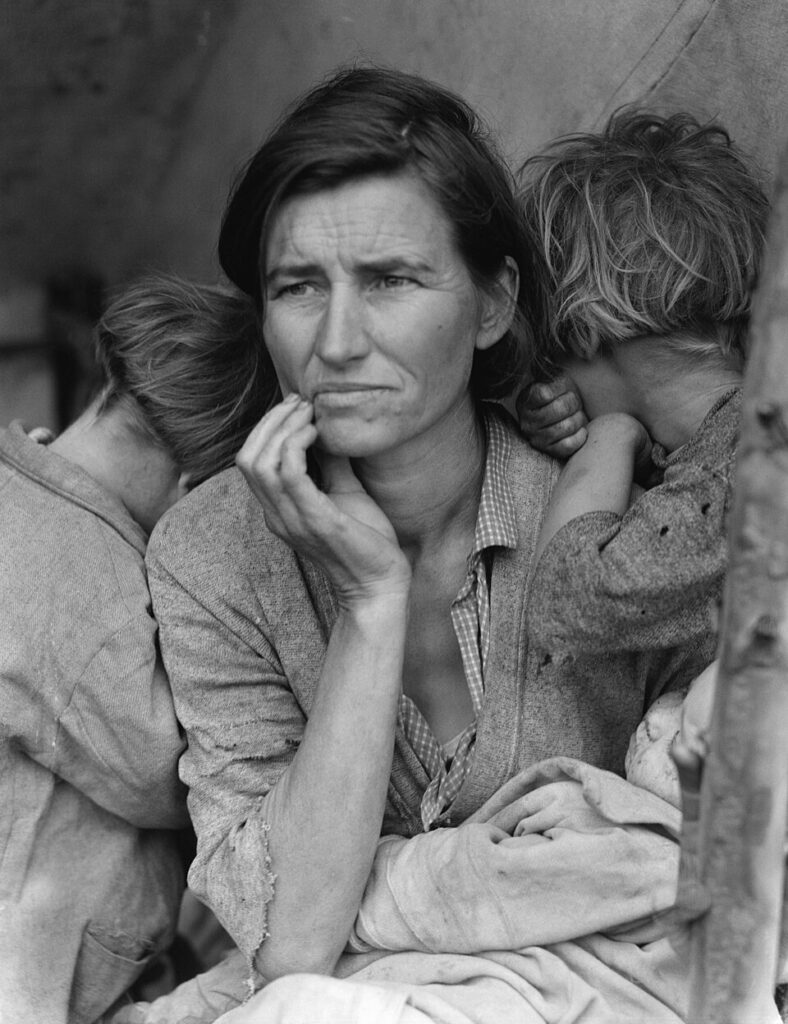
This photograph, taken by Dorothea Lange in 1936, is famous for showcasing broader sentiments of life during the Great Depression through the tired eyes of a weary mother surviving one day at a time.
Despite being almost a century removed from the tumultuous times of the Great Depression, the raw emotion in the expression of this “migrant mother” still transcends decades. This is a prime example of the power of photography. While color film was still in its infancy, I personally feel as if the black and white aesthetic works well at helping exemplify the emotion of the image.
Now, I’ve seen (and I’m sure you have as well) this iconic photo before. Before writing this blog post I only possessed a few minor surface level details about it. However, after reading the Wiki page about this photograph (hyperlinked above) I have a much deeper appreciation for this piece of art. This is a prime example of the importance of a multimedia approach to digital storytelling – Isolated in their respective vacuums, the photo and the written story possess great power. But, when combined in a digitally digestible way, the gravitas of this mother and her children’s stories increases in tenfold.
My Personal Experiences
I’ve never really viewed myself as a “photographer,” moreso just a guy who likes occasionally taking pictures. Regardless, at the end of the day I just enjoy taking pictures of things I find neat. Below are a few pictures I’ve taken that I’m proud of (all on 35mm film from my mom’s old camera). I’ve thrown together incredibly brief captions to provide some context (in an effort to practice what I’ve been preaching in this blog post).


Conclusion
Sure, there are picture books (my favorite kind) and museum exhibitions (also my favorite) that allow for a mixed media experience. Both of these things are very valuable, but the potential digital storytelling has for expanding access to an educational way of absorbing high quality interactive content is currently — in my newly formed opinion after being exposed to these ideas in this class —very underappreciated. I encourage you to try and apply some of what this blog post has espoused (I know I will definitely work on implementing some of these methods myself)!
-Blake 🙂
Proud Mom here and also original owner of Blake’s Olympus OM-G 35mm camera…. I thoroughly enjoy reading Blake’s blog with his observations and thoughts. I love looking at photos and taking photos as ways of honoring, savoring, and respecting moments.
Pingback: Unit Reflection: Intro to Visual Storytelling – Blake’s Peru Study Abroad Journal